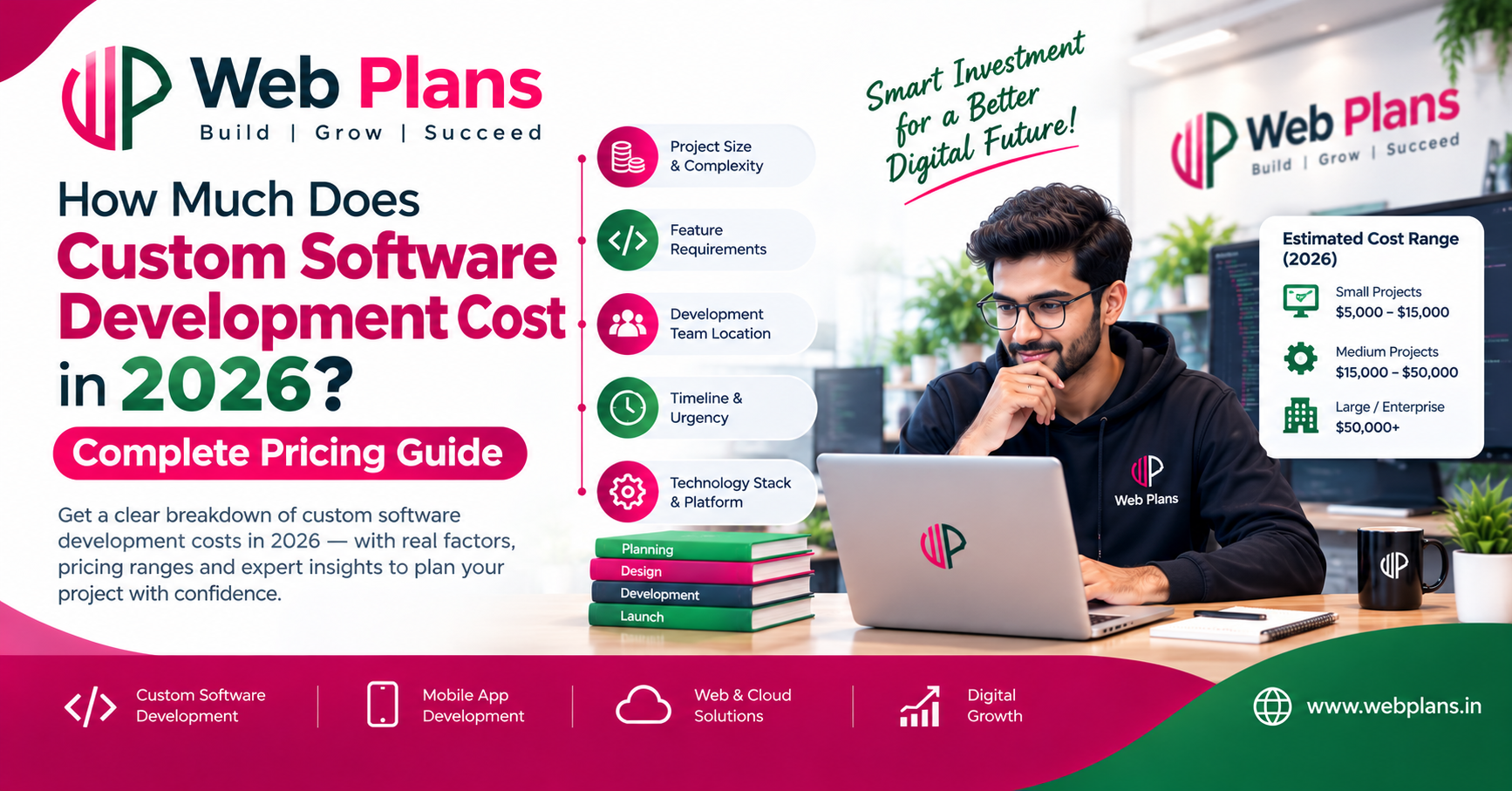
*Your definitive, SEO‑optimized resource for understanding every cost factor, pricing model, and budgeting tip you need to master custom software development in 2026.*
---
## Table of Contents
1. [Why Custom Software Still Beats Off‑the‑Shelf Solutions](#why-custom-software-still-beats-off-the-shelf-solutions)
2. [The 2026 Cost Landscape: Key Drivers](#the-2026-cost-landscape-key-drivers)
3. [Pricing Models Explained](#pricing-models-explained)
4. [Typical Cost Ranges by Project Type](#typical-cost-ranges-by-project-type)
5. [Geography Matters: Regional Rate Comparison](#geography-matters-regional-rate-comparison)
6. [Hidden & Ongoing Expenses You Can’t Ignore](#hidden--ongoing-expenses-you-cant-ignore)
7. [How to Build a Realistic Budget (Step‑by‑Step)](#how-to-build-a-realistic-budget-step-by-step)
8. [Pro Tips to Reduce Development Costs Without Sacrificing Quality](#pro-tips-to-reduce-development-costs-without-sacrificing-quality)
9. [FAQ](#faq)
10. [Ready to Turn Your Vision into Reality?]("#ready-to-turn-your-vision-into-reality")
---
## Why Custom Software Still Beats Off‑the‑Shelf Solutions
Even in 2026, businesses of every size are choosing **custom software** over generic SaaS or packaged products. Here’s why:
| Benefit | What It Means for Your Bottom Line |
|---------|--------------------------------------|
| **Exact Fit** | No wasted features → lower training & support costs |
| **Scalability** | Architecture grows with you, avoiding costly migrations |
| **Competitive Edge** | Unique workflows that rivals can’t copy |
| **Data Ownership & Security** | Full control over compliance, encryption, and audit trails |
| **Integration Freedom** | Seamless connection to legacy systems, IoT devices, AI engines, etc. |
If you’re still debating whether to build or buy, the cost guide below will show you how to **budget intelligently** and **measure ROI** before you sign a contract.
---
## The 2026 Cost Landscape: Key Drivers
Custom software pricing is not a single number—it’s a matrix of variables. Below are the most influential factors in 2026.
### 1. Project Complexity
- **Simple CRUD apps** (Create, Read, Update, Delete) → low complexity
- **Data‑intensive platforms** (big‑data analytics, AI/ML pipelines) → high complexity
### 2. Technology Stack
| Stack | Typical Hourly Rate (USD) | Why It Affects Cost |
|-------|--------------------------|---------------------|
| **JavaScript (Node.js, React)** | $70‑$130 | High talent pool → competitive rates |
| **Python (Django, FastAPI, AI/ML)** | $80‑$150 | Specialized libraries & data science expertise |
| **Java / Spring Boot** | $85‑$160 | Enterprise‑grade, strong typing, longer development cycles |
| **.NET (C#, Azure)** | $75‑$140 | Microsoft ecosystem licensing & integration costs |
| **Rust / Go** | $100‑$180 | High performance, low‑level control, niche talent |
### 3. Team Composition
| Role | Avg. Hourly Rate (USD) | Typical % of Total Effort |
|------|-----------------------|---------------------------|
| Project Manager | $90‑$150 | 10‑15% |
| UI/UX Designer | $70‑$130 | 5‑10% |
| Front‑End Engineer | $70‑$130 | 20‑30% |
| Back‑End Engineer | $80‑$150 | 25‑35% |
| QA / Test Engineer | $60‑$110 | 10‑15% |
| DevOps / Cloud Engineer | $85‑$160 | 5‑10% |
| Data Scientist / AI Engineer | $100‑$190 | 5‑10% (if applicable) |
### 4. Delivery Model
- **Fixed‑price contracts** → risk shifted to vendor, requires crystal‑clear specs.
- **Time‑and‑materials (T&M)** → flexible scope, ideal for agile, but budget control rests with you.
- **Dedicated team** → you “rent” a full crew; best for long‑term, evolving products.
### 5. Timeline & Speed
- **Standard pace** (8‑12 weeks for MVP) → baseline cost.
- **Accelerated delivery** (sprints of 2‑3 weeks) → 15‑30% premium for extra resources.
### 6. Regulatory & Compliance Requirements
- GDPR, HIPAA, PCI‑DSS, CCPA, ISO 27001, etc. add **security audits, documentation, and testing** overhead (≈ 10‑20% extra).
---
## Pricing Models Explained
Understanding the **pricing model** you choose will determine how transparent and predictable your spend is.
### 1. Fixed‑Price Model
- **Best for:** Well‑defined scope, low risk of major changes.
- **How it works:** Vendor provides a single total price after a detailed requirement workshop.
- **Pros:** Predictable budget, clear deliverables.
- **Cons:** Scope creep can lead to change‑order fees; less flexibility for new ideas.
### 2. Time‑and‑Materials (T&M)
- **Best for:** Agile projects, evolving requirements, exploratory prototypes.
- **How it works:** You pay for actual hours worked plus agreed‑upon rates.
- **Pros:** Flexibility, easier to incorporate feedback.
- **Cons:** Requires strong project management to avoid ballooning costs.
### 3. Dedicated Development Team
- **Best for:** Long‑term product roadmaps, internal “software factory”.
- **How it works:** You hire a team on a monthly basis; you manage backlog and priorities.
- **Pros:** Full control, stable team dynamics, cost‑effective for > 6‑month engagements.
- **Cons:** You assume management overhead; monthly commitment.
### 4. Hybrid Model
- Combine a **fixed‑price MVP** with a **dedicated team** for post‑launch enhancements.
- Ideal for startups that need a quick market entry but plan continuous iteration.
---
## Typical Cost Ranges by Project Type
Below is a **quick‑reference guide** for the most common custom software projects in 2026. All figures are **USD**, based on average rates and a typical scope for each category.
| Project Type | Estimated Hours | Cost (USD) | Typical Timeline |
|--------------|----------------|------------|------------------|
| **MVP for a Mobile App** (iOS/Android) | 800‑1,200 | $70,000 ‑ $150,000 | 3‑5 months |
| **Web SaaS Platform (B2B)** | 1,500‑2,500 | $130,000 ‑ $300,000 | 5‑8 months |
| **Enterprise ERP Module** | 2,500‑4,000 | $250,000 ‑ $600,000 | 8‑12 months |
| **AI‑Powered Recommendation Engine** | 1,200‑2,000 | $150,000 ‑ $350,000 | 4‑7 months |
| **IoT Dashboard + Device Firmware** | 2,000‑3,500 | $200,000 ‑ $500,000 | 6‑10 months |
| **Blockchain Smart‑Contract Suite** | 800‑1,500 | $120,000 ‑ $260,000 | 4‑6 months |
| **Legacy System Modernization** | 1,800‑3,000 | $180,000 ‑ $420,000 | 5‑9 months |
> **Pro tip:** Add **10‑15% contingency** to any estimate to cover unforeseen technical debt or scope adjustments.
---
## Geography Matters: Regional Rate Comparison
Your choice of development hub dramatically impacts the bottom line. Below is a **2026 regional rate matrix** (average hourly rates for senior‑level developers).
| Region | Avg. Senior Dev Rate (USD/hr) | Typical Cost Savings vs. North America |
|--------|------------------------------|----------------------------------------|
| **North America (US & Canada)** | $130 ‑ $190 | — |
| **Western Europe (UK, Germany, France)** | $110 ‑ $170 | 5‑15% cheaper |
| **Eastern Europe (Poland, Ukraine, Romania)** | $70 ‑ $110 | 30‑45% cheaper |
| **Latin America (Brazil, Argentina, Colombia)** | $55 ‑ $95 | 45‑55% cheaper |
| **Asia‑Pacific (India, Vietnam, Philippines)** | $40 ‑ $80 | 55‑70% cheaper |
| **Middle East & North Africa (UAE, Egypt, Morocco)** | $60 ‑ $100 | 45‑55% cheaper |
**Why not always go cheapest?**
- **Time zone overlap** → faster feedback cycles.
- **Cultural & language alignment** → smoother communication.
- **Quality & security standards** → compliance readiness.
A **balanced approach**—e.g., a core product team in Eastern Europe with a UI/UX lead in Western Europe—often yields the best ROI.
---
## Hidden & Ongoing Expenses You Can’t Ignore
Many budgets fail because they overlook **post‑launch costs**. Keep these line items in your spreadsheet:
1. **Maintenance & Support** – 15‑20% of initial development cost per year.
2. **Cloud Hosting & Infrastructure** – variable; estimate $0.10‑$0.25 per compute hour for typical SaaS workloads.
3. **Licensing & Third‑Party APIs** – e.g., Stripe, Twilio, Google Maps (often per‑transaction fees).
4. **Security Audits & Pen‑Testing** – $10,000‑$30,000 annually for regulated industries.
5. **Feature Enhancements & Technical Debt Refactoring** – allocate 10% of the original budget each year.
6. **Training & Documentation** – $5,000‑$15,000 for onboarding internal staff.
7. **Legal & Compliance Updates** – especially if new data‑privacy laws emerge.
---
## How to Build a Realistic Budget (Step‑by‑Step)
1. **Define the MVP Scope**
- List *must‑have* features vs. *nice‑to‑have* items.
- Use user stories and acceptance criteria.
2. **Choose a Pricing Model**
- Fixed‑price for MVP, then transition to dedicated team for scaling.
3. **Select the Technology Stack**
- Align with existing talent, future roadmap, and cost per hour.
4. **Estimate Effort Using a Bottom‑Up Approach**
- Break down each user story into tasks.
- Multiply task hours by the appropriate role rate.
5. **Add Contingency & Overhead**
- 10‑15% for risk, 5% for project management.
6. **Factor in Ongoing Costs**
- Hosting, maintenance, licensing, and future enhancements.
7. **Validate with a Third‑Party Quote**
- Compare at least **three** reputable vendors to ensure market‑rate alignment.
8. **Create a Cost‑Benefit Model**
- Estimate revenue uplift, cost savings, or efficiency gains.
- Compute **Payback Period** and **ROI** (e.g., ROI = (Annual Benefit – Annual Cost) / Annual Cost).
---
## Pro Tips to Reduce Development Costs Without Sacrificing Quality
| Tip | How It Saves Money |
|-----|--------------------|
| **Start with a Low‑Fidelity Prototype** | Validate UX early, avoid re‑work after code is written. |
| **Leverage Open‑Source Libraries** | Reduce custom code by 15‑30% when licensing permits. |
| **Adopt a Micro‑services Architecture Only When Needed** | Monoliths are cheaper to build for small‑scale MVPs. |
| **Use Cloud‑Native Managed Services** (e.g., AWS RDS, Azure Functions) | Cut infrastructure ops by 20‑40%. |
| **Implement Automated Testing from Day 1** | Decrease QA hours and post‑release bugs. |
| **Batch Feature Requests** | Group related changes into single sprints to reduce context switching. |
| **Negotiate a “Cap” on T&M Projects** | Set a maximum spend while retaining flexibility. |
| **Consider Nearshoring** | Balance cost savings with similar time zones for faster iteration. |
| **Plan for Incremental Releases** | Generate early revenue that can fund later phases. |
| **Document API Contracts Early** | Prevent integration mismatches that cost weeks to fix. |
---
## FAQ
**1. What’s the average hourly rate for a senior full‑stack developer in 2026?**
- Globally it ranges from **$40 – $190** per hour, with Eastern Europe and Latin America offering the most cost‑effective talent at **$70 – $110**.
**2. How long does it take to develop a custom SaaS platform from scratch?**
- A typical B2B SaaS platform (core features, admin panel, API) requires **1,500‑2,500 hours**, translating to **5‑8 months** for a dedicated team.
**3. Is a fixed‑price contract safe for complex AI projects?**
- Fixed‑price works best when the problem statement, data availability, and success metrics are crystal clear. For exploratory AI work, a **hybrid** (fixed‑price proof of concept + T&M for iteration) reduces risk.
**4. Can I reduce costs by using offshore developers only?**
- Offshore rates are lower, but you must factor in **communication overhead, time‑zone lag, and potential quality variance**. A mixed model (core team onshore + offshore specialists) often yields the best balance.
**5. How do I calculate the ROI of a custom software investment?**
- Identify **tangible benefits** (e.g., labor savings, new revenue streams) and **intangible benefits** (brand differentiation, data insights). Use the formula:
\[
\text{ROI} = \frac{\text{Annual Net Benefit}}{\text{Total Investment}} \times 100\%
\]
A 12‑month payback period is a common benchmark for SaaS‑type projects.
---
## Ready to Turn Your Vision into Reality?
Custom software is a strategic asset—*not* a cost center. With the right budgeting discipline, a transparent pricing model, and a partner that understands the 2026 market, you can launch faster, spend smarter, and outpace competitors.
**🚀 Let Web Plans be your launchpad.**
- **Free discovery call** – We’ll map your requirements and give you a **no‑obligation cost estimate** within 48 hours.
- **Dedicated project manager** – One point of contact, weekly progress demos, and a clear roadmap.
- **Transparent pricing** – Choose fixed‑price, T&M, or a dedicated team—no hidden fees.
[**Schedule Your Free Consultation Now →**](https://www.webplans.com/contact)
*Your custom software journey starts with a single click. Let’s build something extraordinary together.*
Ready to build your project?
Get a free 30-minute consultation with our engineering team. No sales pitch — just technical clarity.